
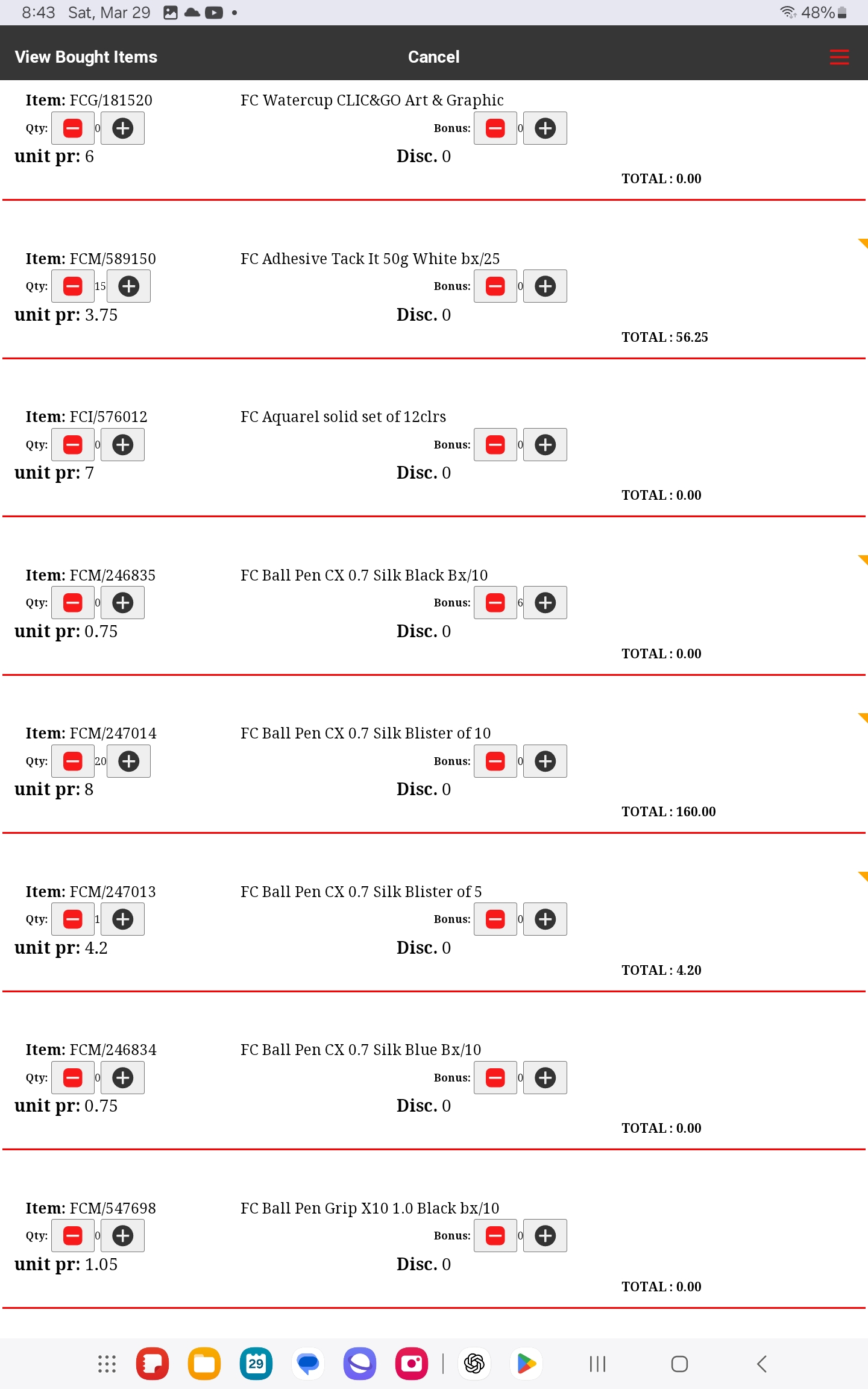
Pre-sales and van sales can serve the same customer network, but they control inventory, invoicing and delivery in different ways. Choosing the correct mobile workflow matters because the application must reflect what the representative can promise and complete at the customer.
How pre-sales works
In a pre-sales model, the representative visits the customer and records an order for later fulfillment. The back office reviews the order, applies credit or approval rules, prepares goods in the warehouse and assigns delivery. The representative focuses on coverage, demand and customer follow-up rather than carrying the final stock.
Pre-sales fits companies that need centralized warehouse control, scheduled picking or separate delivery teams. Mobile users need accurate products and prices, customer balances, order history and a clear order status after synchronization.
How van sales works
In a van-sales model, inventory is loaded onto a vehicle and sold or delivered during the route. The representative needs visibility into the stock assigned to that vehicle, can issue a sale or delivery transaction, collect payment and record returns. End-of-day reconciliation between opening stock, sales, returns, collections and remaining stock is essential.
Van sales fits immediate-service routes such as some food, beverage, water and fast-moving consumer goods operations. It demands tighter mobile controls because the field transaction changes both inventory and the customer account.
Some teams use a hybrid model
A company may take pre-orders for large customers while serving smaller outlets from the van. Another workflow loads previously confirmed orders and allows limited additional sales. The system should distinguish each transaction type and apply the correct price, stock and approval rules.
Questions that identify your model
- Does the representative carry sellable stock?
- Is the customer invoice created during the visit or later?
- Who confirms product availability?
- Are collections made at the same time as delivery?
- How are returns and damaged goods reconciled?
- Does the ERP track inventory by vehicle or warehouse?
The right answer is defined by the physical flow of goods and money, not by the job title of the representative. Map that flow first, then configure the mobile steps and ERP synchronization around it.