
Pharmaceutical field teams often work with several types of visits. A doctor visit may focus on product discussion, samples and feedback, while a pharmacy visit may include availability checks, an order, a collection or merchandising activity. Tracking them well requires a structured workflow that still leaves room for meaningful notes.
Plan the right call
The system should give representatives an assigned list of doctors, pharmacies, clinics or hospitals with the relevant location and visit objective. Managers can organize routes by geography, specialty, priority or service frequency. Out-of-plan visits should remain possible but be identified clearly for later review.
Record the visit at the point of activity
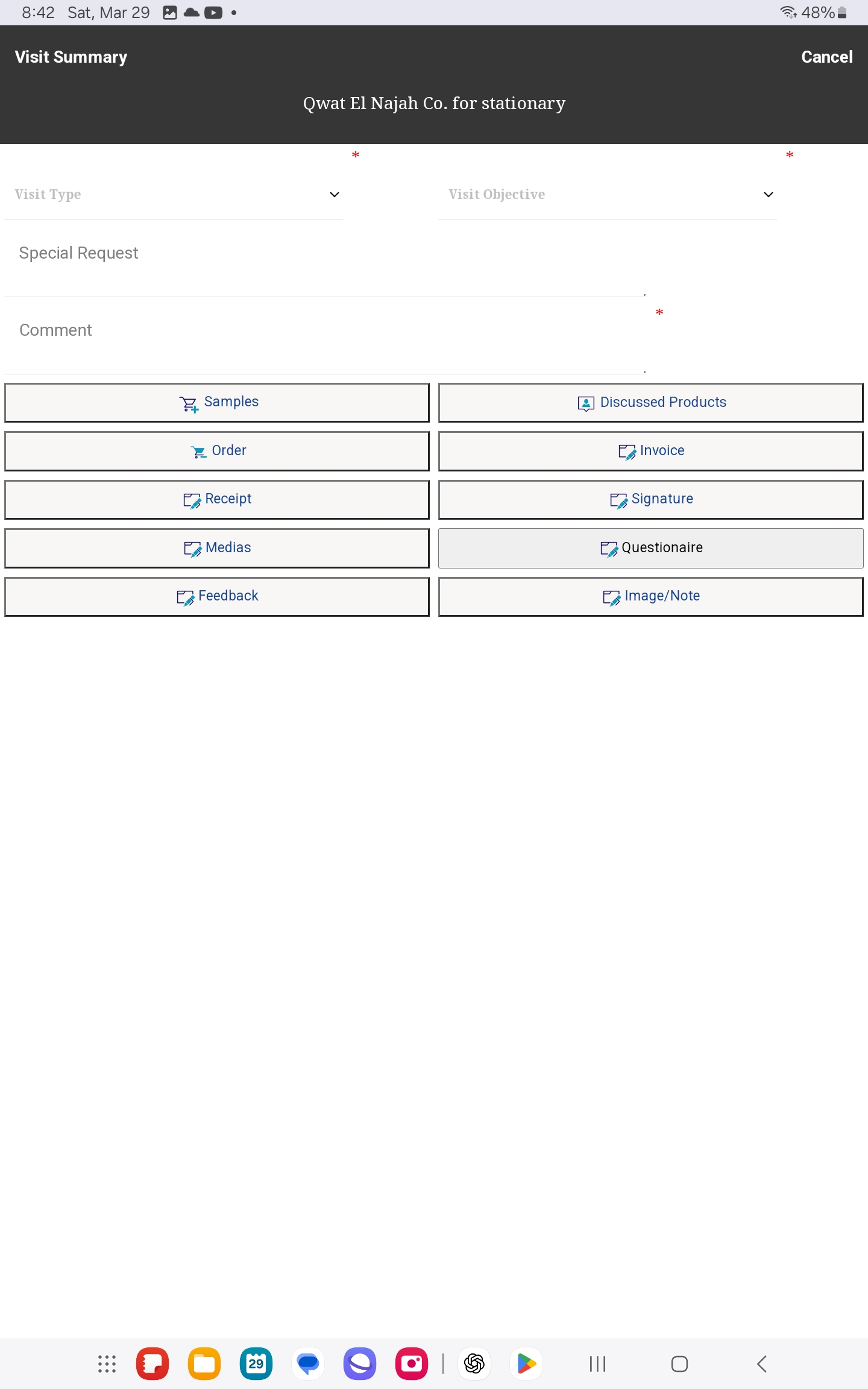
At the customer, the representative starts the visit on the mobile device and chooses the objective. Depending on company policy, the record may include discussed products, samples, a questionnaire, feedback, an order, a receipt, an image or a signature. Start and end times and location context help managers understand execution without replacing professional judgment.
Separate useful evidence from surveillance
The goal is to build a reliable activity record, not to collect data with no business purpose. Each required field should answer a real management question. For example, sample quantities support control, product discussions support follow-up, and visit outcomes help plan the next action. Excessive mandatory fields slow representatives and reduce data quality.
Review coverage and follow-up
Managers need more than a list of completed visits. Useful views show planned versus completed calls, missed or out-of-plan visits, activity by representative, customer type, specialty, area and date. They should also reveal the next action: a follow-up visit, sample replenishment, an order issue or a customer request.
A practical visit design
- Define visit types and objectives for each customer category.
- Keep required fields limited to decisions the business will use.
- Allow notes and media where context matters.
- Link orders, receipts and samples to the same visit.
- Review coverage patterns with supervisors regularly.
A structured mobile visit replaces fragmented spreadsheets and chat messages with one operational record. When that record synchronizes with the back office, supervisors can coach teams using consistent evidence and representatives can return to each account with better context.