
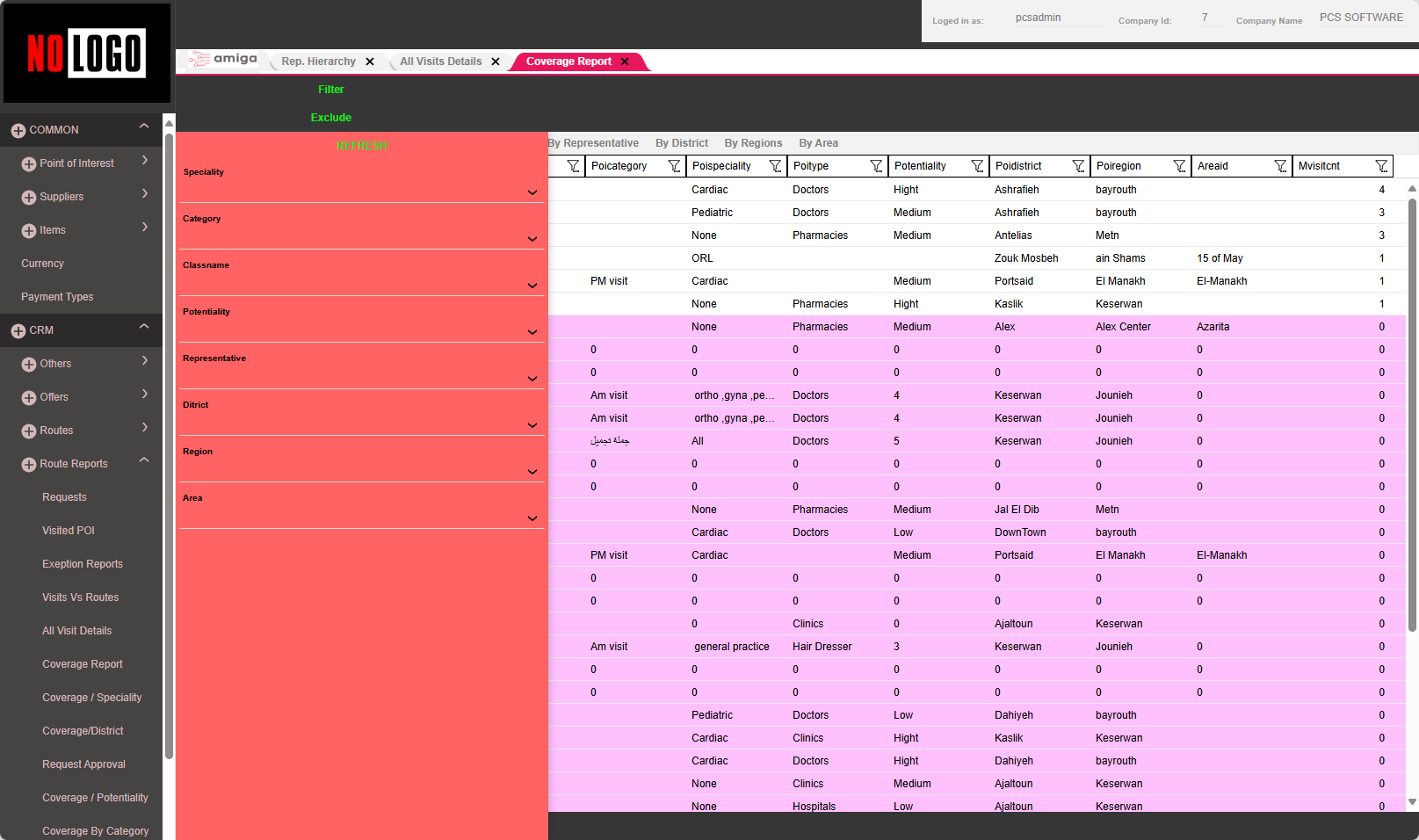
Customer coverage is a key indicator for field sales teams. It shows whether customers assigned to a territory were visited during a specific month or sales cycle.
However, complete coverage is not simply about visiting every customer once. Different customers may require different visit frequencies and types.
Coverage is not one-size-fits-all
For example:
- Standard customers may require one visit per cycle.
- Priority customers may require two visits per cycle.
- Strategic customers may require a supervisor visit.
- Some customers may require a “double visit,” where the supervisor accompanies the salesperson.
Complete coverage means ensuring that the right customers are visited the right number of times, by the right people.
Measuring customer coverage
Basic customer coverage is calculated as:
Unique customers visited ÷ Target customers × 100
If a salesperson manages 100 customers and visits all of them once, unique coverage is 100%.
But suppose 20 of those customers require two visits per month. The complete plan would contain 120 visits:
- 80 customers visited once
- 20 customers visited twice
Visiting every customer once achieves 100% unique coverage, but only 100 of the 120 required visits have been completed. The second visits to the 20 priority customers are still missing.
Managers should therefore monitor both:
- How many different customers were reached
- Whether each customer received the required number of visits
Supervisor and double visits
Some customers require direct supervisor involvement.
A supervisor may visit a customer independently to address an issue, strengthen the relationship or follow up on an important opportunity.
During a double visit, the supervisor accompanies the salesperson. This can help with:
- Field coaching
- Important negotiations
- Customer complaints
- Product launches
- Promotional execution
- Strategic account development
A double visit should normally be recorded as one customer visit with both employees participating—not as two separate customer visits. This keeps coverage figures accurate while allowing the company to track supervisor activity.
Better coverage creates better execution
Counting total visits is not enough. A salesperson may complete many visits while repeatedly meeting the same customers and leaving others uncovered.
Effective coverage management should show:
- Customers visited and not visited
- Required and completed visit frequency
- Second visits still pending
- Supervisor visits
- Double visits
- Timing of visits during the cycle
Amiga Cloud gives managers visibility into customer visits, visit frequency, supervisor activity and route execution. Teams can identify coverage gaps during the cycle, while there is still time to act.
Customer coverage is not only about reaching every customer. It is about providing the right frequency and the right level of field involvement for every important account.